A Guide to Radio Licensing Rules Abroad

This in-depth guide covers everything you need to know about using two-way radios and walkie talkies outside the UK, including which radios work where, what the rules are across Europe, and what your best options are if you need reliable communication abroad.
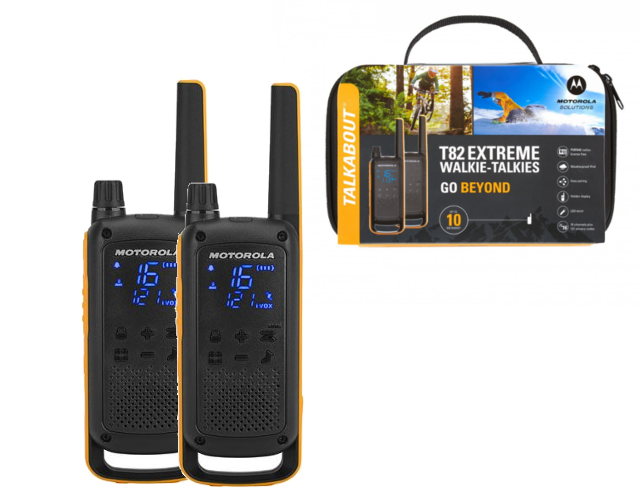
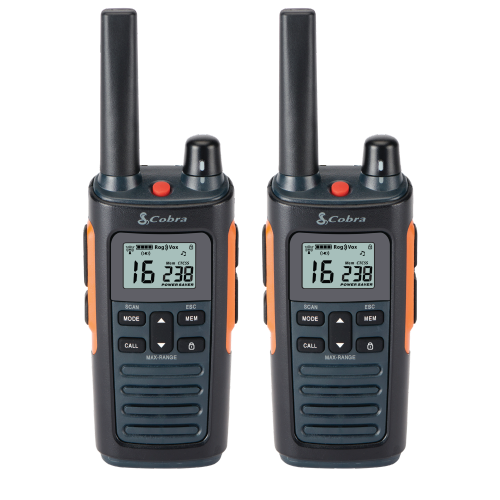
- Licence-free (PMR446) walkie talkies can be used across most of Europe without any additional paperwork.
- Licensed radios (e.g. MOTOTRBO™) - your UK Ofcom licence does not cover you abroad. You will need a licence from each country's own regulatory authority.
- POC/Push-to-Talk over Cellular radios work anywhere with a mobile signal, no radio licence required just a SIM card.*
The good news for most travellers is that PMR446 is a harmonised European standard managed by CEPT (the European Conference of Postal and Telecommunications Administrations). This means that across the vast majority of European countries, your UK licence-free radio can be used legally without any additional licence or paperwork.
Where PMR446 radios can be used without a licence:
Western Europe: Austria, Belgium, France, Germany, Liechtenstein, Luxembourg, Monaco, Netherlands, Switzerland
Southern Europe: Albania, Andorra, Bosnia and Herzegovina, Croatia, Cyprus, Gibraltar, Greece, Italy, Kosovo, North Macedonia, Malta, Montenegro, Portugal, San Marino, Serbia, Slovenia, Spain, Turkey, Vatican City
Northern Europe: Denmark, Estonia, Finland, Iceland, Ireland, Latvia, Lithuania, Norway, Sweden
Eastern Europe: Belarus, Bulgaria, Czech Republic, Georgia, Hungary, Moldova, Poland, Romania, Slovak Republic
This covers the vast majority of popular European holiday and business destinations - including France, Spain, Italy, Germany and Portugal.
Important Exceptions and Caveats
Russia and Ukraine - only channels 1-8 (446.0-446.1MHz) are permitted. If your radio uses channels 9-16 (446.1-446.2 MHz) it cannot legally be used in these countries.
Outside Europe - uses different frequencies. PMR446 is only a European standard so if you travel outside CEPT member countries including the USA, Canada, Australia or further afield - your UK licence-free radio almost certainly cannot be legally used.
In the USA, the 446 MHz frequencies are actually allocated to amateur radio operators and military radar. Always check with the relevant authority before travelling outside Europe. Also you must remember to bring your radio's user manual as some countries may ask you to demonstrate compliance with the PMR446 standard at customs or border control.
This is where things get more complex. Professional licensed radios like the MOTOTRBO™ R5 Motorola MOTOTRBO™ R5Licensed Two-Way RadioView product or R7 are programmed to specific frequencies allocated by Ofcom under your UK licence. Those frequencies are unique to the UK regulatory framework and are not harmonised across Europe the same way PMR446 is.
Your UK Ofcom licence does not give you any legal authority to transmit on those frequencies in another country. To legally use a licenced radio abroad, you would need to:
- Contact the national telecommunications regulator in the country (countries) you are visiting
- Apply for a temporary visitor's licence or equivalent permit
- Have your radio reprogrammed to use frequencies permitted in that country
In practice, this process can be time-consuming and applications may take weeks to process. It can also be costly as fees vary significantly by country. It is not guaranteed as there is no obligation for a foreign regulator to grant a licence. For most short-term trips, this route is impractical which is why we always recommend POC radio as the better solution (more on this below).
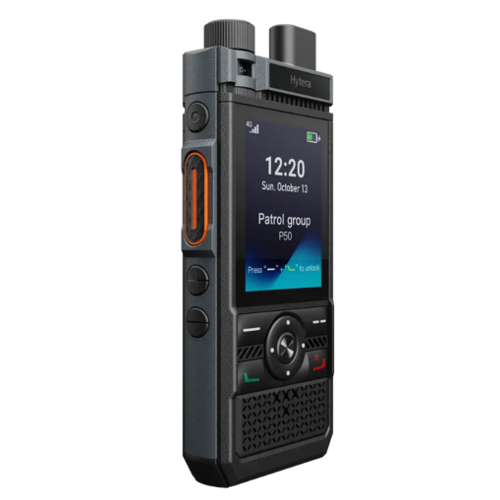
If you need professional-grade communication outside of the UK, Push-to-Talk over Cellular (PTTOC, POC) radio is the most practical and legally straightforward option available. They work like traditional two-way radios in operation with a push button, but instead of transmitting over radio frequency they use 4G, 5G or Wi-Fi mobile networks. Because they use the cell towers rather than radio spectrum, they are not subject to radio frequency licensing regulations in any country.
Key advantages of travelling with POC radios:
- No licence required anywhere in the world
- Unlimited range across cities, countries or continents where there is mobile coverage (93% of the world)
- No reprogramming required, same device works everywhere
- Group communication regardless of location
- GPS tracking includes real-time location sharing
- Works on existing infrastructure so no need to set up repeaters or base stations
POC radios use a SIM card to connect to cellular networks and this is something worth planning carefully before you travel.
Unlike a phone that you occasionally browse on, a POC radio maintains a continuous data connection - always on and ready to receive which means data is being consumed constantly and can rack up roaming charges very quickly.
Luckily, our 12 Month 4G/5G SIM comes as standard with UK, EU + US roaming included.
For Motorola POC radios, you'll get Europe-wide coverage included as part of your Wave PTX subscription.

This is a journey that catches many radio users off guard - particularly those in logistics, construction or events who regularly cross the border.
Northern Ireland is part of the United Kingdom. Ofcom is the regulatory authority, and your UK radio licence applies in full. PMR446 radios work as standard.
The Republic of Ireland is a separate jurisdiction with its own regulatory framework. ComReg is the national authority, and your UK Ofcom licence does not cover you south of the border.
In practical terms this means:
- PMR446 users will have no issue. The Republic of Ireland is a CEPT member country and PMR446 operates freely across the border without any additional paperwork
- Licensed radio users your UK licence stops at the border. To legally operate a licensed radio in the Republic of Ireland you would need to obtain authorisation from ComReg
For businesses running regular cross-border operations POC radio is the most practical solution, as it operates over cellular networks and requires no radio frequency licence on either side of the border.

There is no specific exemption from customs formalities for licensed radios, so it is advisable to carry your Ofcom licence documentation and proof of purchase when travelling.
| Country | Authority | Abbreviation |
|---|---|---|
| United Kingdom | Office of Communications | Ofcom |
| France | Autorité de Régulation des Communications Électroniques et des Postes | ARCEP |
| Germany | Bundesnetzagentur (Federal Network Agency) | BNetzA |
| Spain | Ministry of Economic Affairs and Digital Transformation | MAETD |
| Italy | Ministry of Enterprises and Made in Italy | MIMIT |
| Netherlands | Radiocommunications Agency Netherlands | Agentschap Telecom |
| Belgium | Institut Belge des Services Postaux et des Télécommunications | BIPT |
| Portugal | Autoridade Nacional de Comunicações | ANACOM |
| Austria | Austrian Communications Authority | KommAustria |
| Switzerland | Federal Office of Communications | OFCOM (CH) |
| Ireland** | Commission for Communications Regulation | ComReg |
| Sweden | Post och telestyrelsen | PTS |
| Norway | Norwegian Communications Authority | Nkom |
| Denmark | Agency for Digital Government | Digst |
| Poland | Office of Electronic Communications | UKE |
| Greece | Hellenic Telecommunications and Post Commission | EETT |
** A note on Ireland: The Republic of Ireland and Northern Ireland operate under separate regulatory frameworks. PMR446 users will have no issue crossing the border as the Republic of Ireland is a CEPT member. Licensed radio users should be aware that your UK Ofcom licence does not apply south of the border. See the full section above for more detail.